---
title: "Emergency Care Decision Example: What to Do First"
description: Use this emergency care decision example to choose 911, the ER, urgent care, or home care while considering symptoms, timing, cost, and safety first.
image: https://afocirmbqdxnkyescnev.supabase.co/storage/v1/object/public/featured-images/7524cf5d-b4b1-4b41-9eb8-c8748cefd60d/620ae153-bc75-452f-8cd3-7196c28f2f5f.webp
---
- [For Employers](https://ful-health.com/for-employers)
- [Overview](https://ful-health.com/for-employers)
- [Turnover Impact](https://ful-health.com/be/growth-capacity)
- [Business Case](https://ful-health.com/be/the-business-case)
- [What FUL Includes](https://ful-health.com/be/consider-ful)
- [Resources](https://ful-health.com/resource-center)
- [About Us](https://ful-health.com/about-us)
- Blog
- [Workforce Insights](https://ful-health.com/blog/workforce-insights)
- [Healthcare Guides](https://ful-health.com/blog/healthcare-guides)
- [Employer Resources](https://ful-health.com/resource-center)
[Get FUL →](https://ful-health.com/?get-ful=paid)
- [For Employers](https://ful-health.com/for-employers)
- [Overview](https://ful-health.com/for-employers)
- [Turnover Impact](https://ful-health.com/be/growth-capacity)
- [Business Case](https://ful-health.com/be/the-business-case)
- [What FUL Includes](https://ful-health.com/be/consider-ful)
- [Resources](https://ful-health.com/resource-center)
- [About Us](https://ful-health.com/about-us)
- Blog
- [Workforce Insights](https://ful-health.com/blog/workforce-insights)
- [Healthcare Guides](https://ful-health.com/blog/healthcare-guides)
- [Employer Resources](https://ful-health.com/resource-center)
[Get FUL →](https://ful-health.com/?get-ful=paid)
[](https://apps.apple.com/us/app/ful-cashpay-health-savings/id6742342974) [](https://play.google.com/store/apps/details?id=com.ful.cashpay)
## Get FUL on your phone
Scan with your phone's camera and we'll take you to the right app store.

Or download it directly
[](https://apps.apple.com/us/app/ful-cashpay-health-savings/id6742342974) [](https://play.google.com/store/apps/details?id=com.ful.cashpay)
# Emergency Care Decision Example: What to Do First
[Carrie Tedore](https://ful-health.com/blog/healthcare-guides/author/carrie-tedore) · October 16, 2026
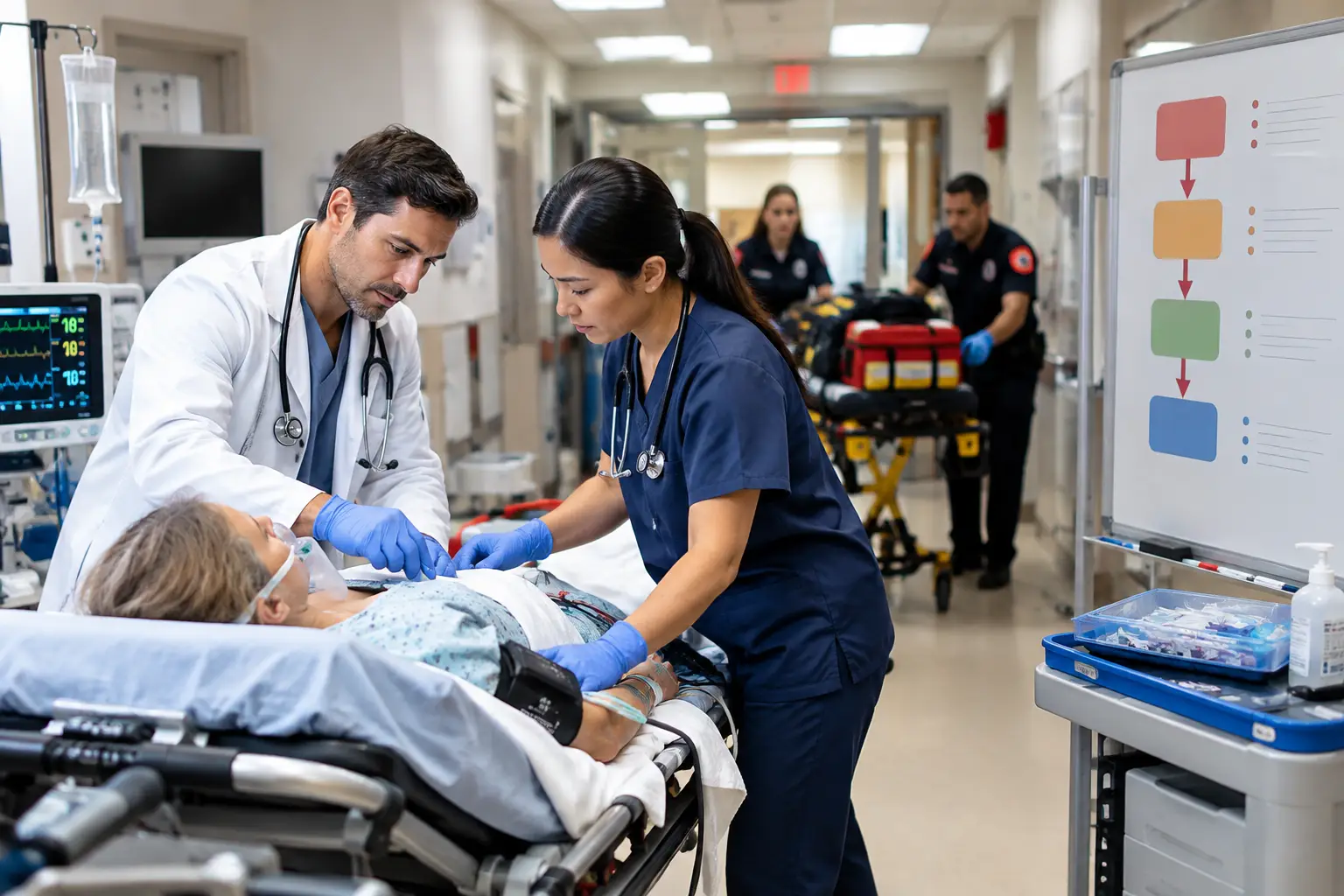
Your child wakes up struggling to breathe. You have crushing chest pressure that will not ease. A cut will not stop bleeding. In moments like these, an emergency care decision example is not about finding the cheapest option or guessing perfectly. It is about recognizing when waiting could cause real harm and getting emergency help right away.
If a symptom could be life-threatening, call 911 or go to the emergency room now. Do not drive yourself if you feel faint, confused, severely weak, or have symptoms that could affect your ability to drive safely. Cost is a real concern for many households, but it should not keep you from getting emergency help when you need it.
## An emergency care decision example in real life
Consider this situation: Marcus, 48, is at home when he develops heavy pressure in the middle of his chest. He is sweaty, nauseated, and short of breath. He wonders whether it might be indigestion and worries about an ER bill because his insurance has a high deductible.
This is not a wait-and-see or urgent care situation. Chest pressure with shortness of breath, sweating, nausea, or pain that spreads to the arm, jaw, back, or shoulder can be a sign of a heart emergency. Marcus should call 911.
The key decision is not whether Marcus can identify the exact cause. Most people cannot, and they should not have to. The question is whether the symptoms could be dangerous enough that time matters. Emergency medical services can begin care on the way to the hospital and take him to a facility equipped for serious heart problems.
That same thinking applies to other possible emergencies. You do not need certainty before seeking emergency care. You need enough concern that delaying care could put someone at greater risk.
## When 911 is the right choice
Call 911 when symptoms are severe, sudden, rapidly worsening, or could threaten breathing, brain function, or circulation. Common examples include:
- Chest pain or pressure, especially with shortness of breath, sweating, nausea, or pain spreading beyond the chest
- Signs of stroke, such as face drooping, arm weakness, new numbness on one side, trouble speaking, sudden confusion, or a sudden severe headache
- Serious trouble breathing, blue or gray lips, choking, or a severe allergic reaction with swelling of the face, tongue, or throat
- Uncontrolled bleeding, fainting, a seizure that is new or prolonged, severe burns, a major injury, or suspected poisoning or overdose
For a possible stroke, remember that sudden changes matter. A person may say they feel fine even while their speech is slurred or one side of their face looks uneven. Call 911 rather than driving them yourself. Ambulance teams can assess the person immediately and alert the hospital before arrival.
For suspected overdose or poisoning, call 911 if the person is unconscious, having trouble breathing, having a seizure, or cannot be awakened. If the person is awake and stable, Poison Control can help you decide what to do next at 1-800-222-1222.
## When the emergency room may make sense
The ER is built for conditions that may need testing, monitoring, procedures, or specialists that urgent care cannot provide. You may be able to get there safely without an ambulance if symptoms are serious but stable and you have a safe driver.
For example, an adult who falls and has a possible broken leg with obvious deformity, severe pain, or inability to bear weight may need an ER. So might someone with a deep cut that exposes tissue, a high fever with confusion, severe abdominal pain, repeated vomiting with signs of dehydration, or a head injury followed by worsening headache, vomiting, confusion, or unusual sleepiness.
The trade-off is straightforward: ER care can be expensive and waits can be long when your condition is not the most urgent. But an ER has imaging, [lab testing](https://ful-health.com/blog/healthcare-guides/cash-price-lab-tests), medications, observation, and emergency specialists available around the clock. When you may need those resources, urgent care is not a substitute.
If you are unsure whether symptoms are truly urgent, describe what is happening clearly when you call 911 or speak with a local nurse line. Say when symptoms began, whether they are getting worse, what medicines the person takes, and any major health conditions. Do not minimize symptoms because you are worried about being judged or about cost.
## When urgent care is often a better fit
Urgent care can be a practical choice when you need prompt, in-person help but the problem does not appear life-threatening. Many centers can evaluate minor injuries, simple infections, rashes, urinary symptoms, mild asthma symptoms that improve with prescribed medicine, ear pain, sore throats, and some cuts that may need stitches.
Here is a different emergency care decision example: Elena twists her ankle stepping off a curb. It is painful and swollen, but she can breathe normally, has no open wound, and her foot is warm with normal color and sensation. She can put some weight on it, although it hurts. An urgent care center may be a reasonable starting point, especially if it can do an X-ray.
But the details change the choice. If Elena's foot is cold, numb, pale, misshapen, or she has severe pain after a major fall or car crash, she should go to the ER. The same body part can require very different care depending on circulation, sensation, injury force, and severity.
Before heading to urgent care, call ahead if you can. Ask whether the location can handle the service you may need, such as X-rays, stitches, or pediatric care. Ask about self-pay pricing if you are uninsured or using a high-deductible plan. A quick call can prevent a second trip and another bill.
## When home care and follow-up can be reasonable
Some problems can be watched at home when symptoms are mild, improving, and not paired with warning signs. That may include a small scrape that stops bleeding with pressure, a mild cold without trouble breathing, a minor muscle strain, or a brief stomach upset when the person can keep fluids down.
Home care is not the same as ignoring the problem. Make a specific plan: rest, drink fluids if appropriate, use over-the-counter medicine only as directed on the label, and check whether symptoms improve, stay the same, or worsen. If you are caring for a child, older adult, pregnant person, or someone with a condition that raises their risk, use a lower threshold for seeking care.
A same-day clinic visit, a primary care office, or a virtual visit can also be a good middle path for nonemergency questions. Think of this option when you need guidance about a new symptom, medication side effect, mild infection symptoms, or whether a problem needs in-person testing. If the clinician recommends emergency care, follow that advice.
## Put safety ahead of the bill, then deal with the bill
Many people hesitate because they do not have insurance, have a large deductible, or are already managing medical debt. That hesitation is understandable. Still, emergency symptoms are one of the times to put safety first. In the United States, hospital emergency departments must provide a medical screening exam and stabilizing treatment for an emergency condition, regardless of insurance status or ability to pay.
After the immediate crisis, ask for an itemized bill and check for errors. If the balance is more than you can manage, ask the hospital about [financial assistance](https://ful-health.com/blog/healthcare-guides/hospital-financial-assistance-guide), charity care, payment plans, and whether your income or household situation may qualify you for help. Keep notes from every call, including the date, the representative's name, and what was discussed.
If you need help sorting through a hospital bill, finding [lower-cost lab or imaging options](https://ful-health.com/blog/healthcare-guides/how-to-ask-cash-prices) after an urgent visit, or figuring out what coverage programs may be available to your household, FUL offers practical healthcare field guides in its free app. Those decisions can wait until you are safe. The emergency decision cannot.
When something feels seriously wrong, trust the change you see. Call 911 for possible life-threatening symptoms, choose the ER when you may need emergency-level testing or treatment, and use urgent care or follow-up care for problems that are stable. You do not need to have all the answers before you ask for help.
Ready to talk?
[Schedule a Conversation →](https://landing.ful-health.com/schedule-a-conversation)
[Contact](https://ful-health.com/contact-us)
©2026 ful.Health LLC All rights reserved.
[Privacy Policy](https://ful-health.com/legal/privacy-policy) [Terms of Service](https://ful-health.com/legal/terms-of-service)
```json
{
"@context" : "https://schema.org",
"@type" : "BlogPosting",
"author" : {
"@type" : "Person",
"name" : "Carrie Tedore",
"url" : "https://ful-health.com/blog/healthcare-guides/author/carrie-tedore"
},
"datePublished" : "2026-10-16T01:13:53.000Z",
"headline" : "Emergency Care Decision Example: What to Do First",
"image" : [ "https://afocirmbqdxnkyescnev.supabase.co/storage/v1/object/public/featured-images/7524cf5d-b4b1-4b41-9eb8-c8748cefd60d/620ae153-bc75-452f-8cd3-7196c28f2f5f.webp" ],
"mainEntityOfPage" : {
"@id" : "https://ful-health.com/blog/healthcare-guides/emergency-care-decision-example",
"@type" : "WebPage"
},
"publisher" : {
"@type" : "Organization",
"logo" : {
"@type" : "ImageObject",
"url" : "https://ful-health.com/hubfs/ful%20logo_full%20color_RGB.png"
},
"name" : "ful.Health LLC"
}
}
```