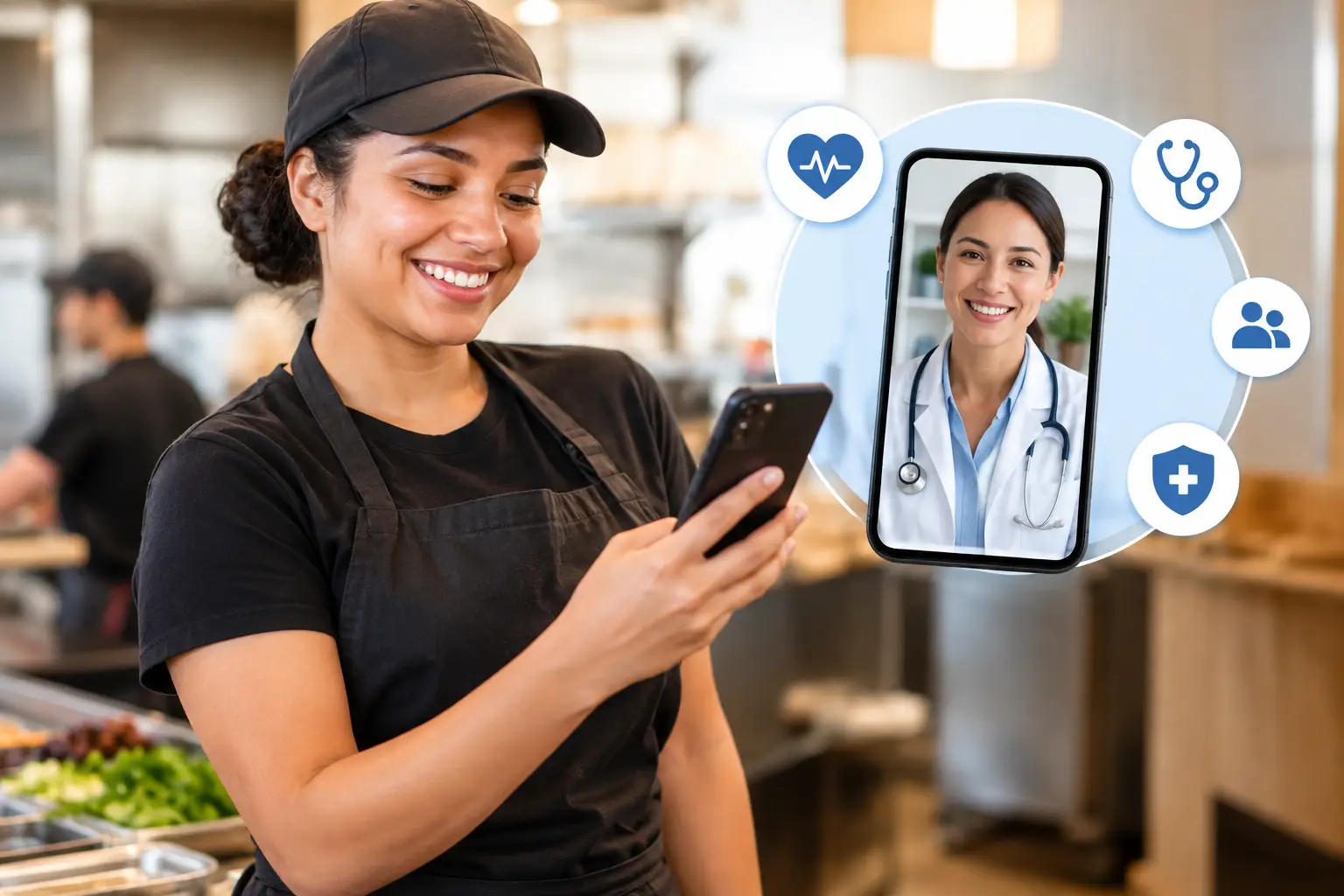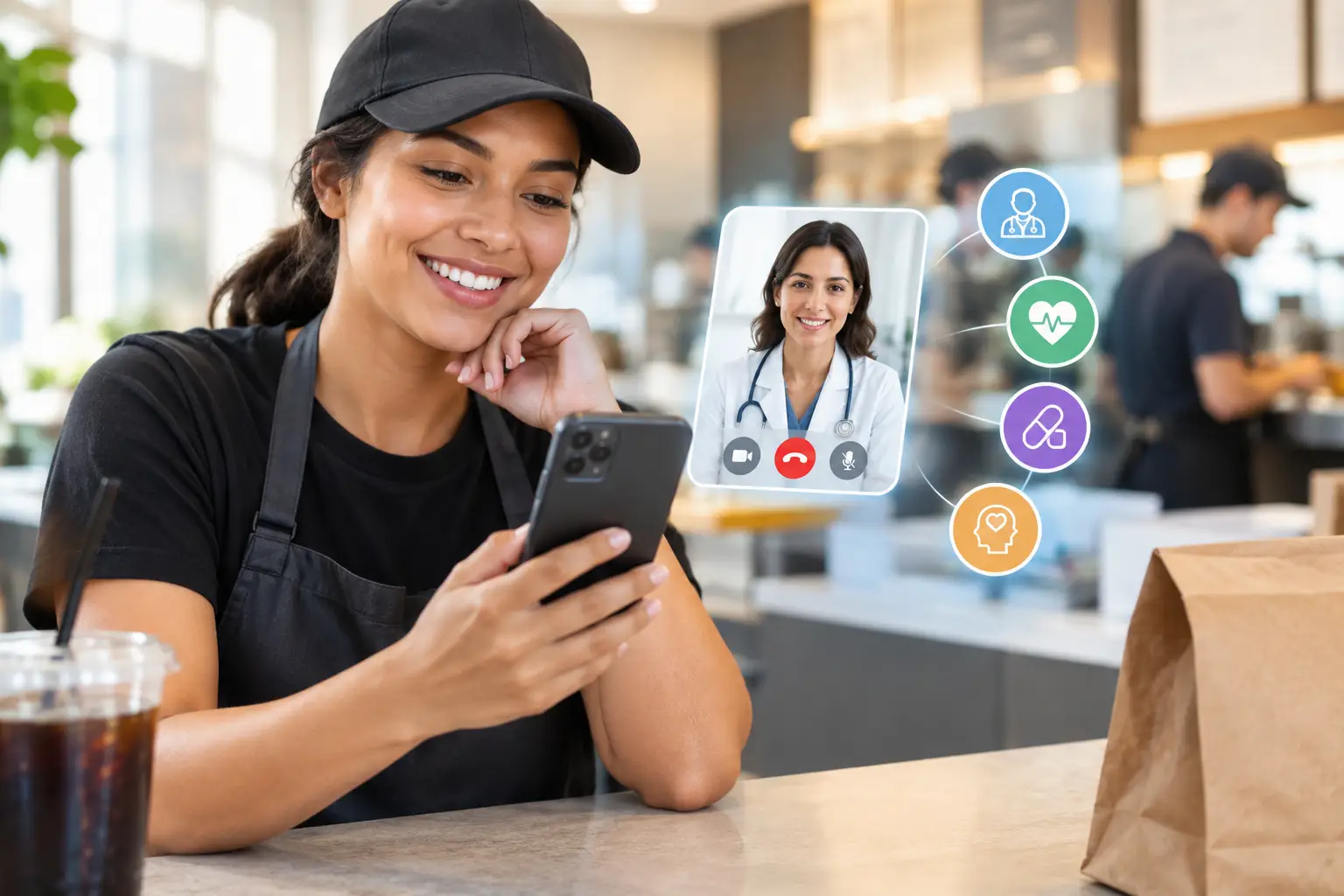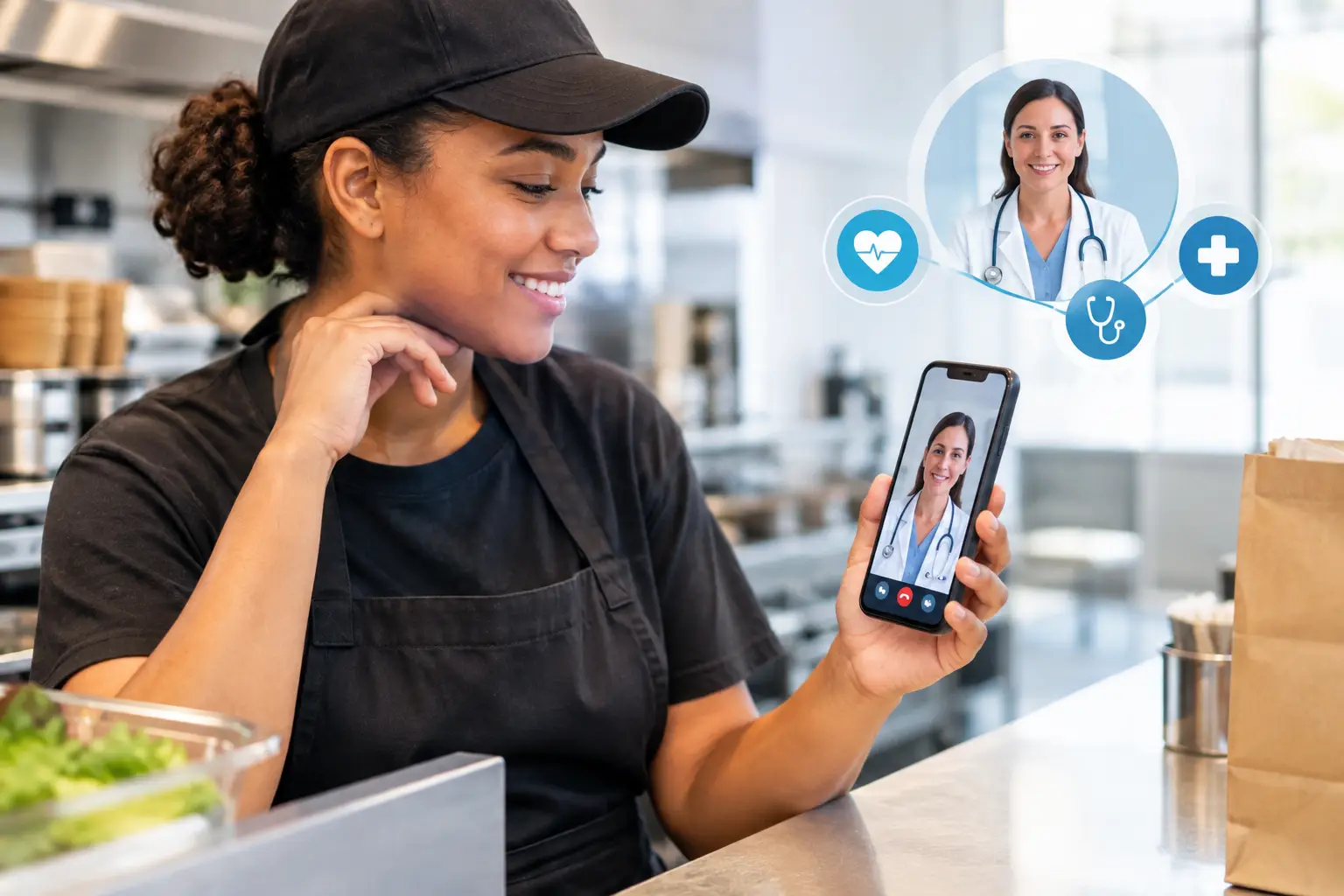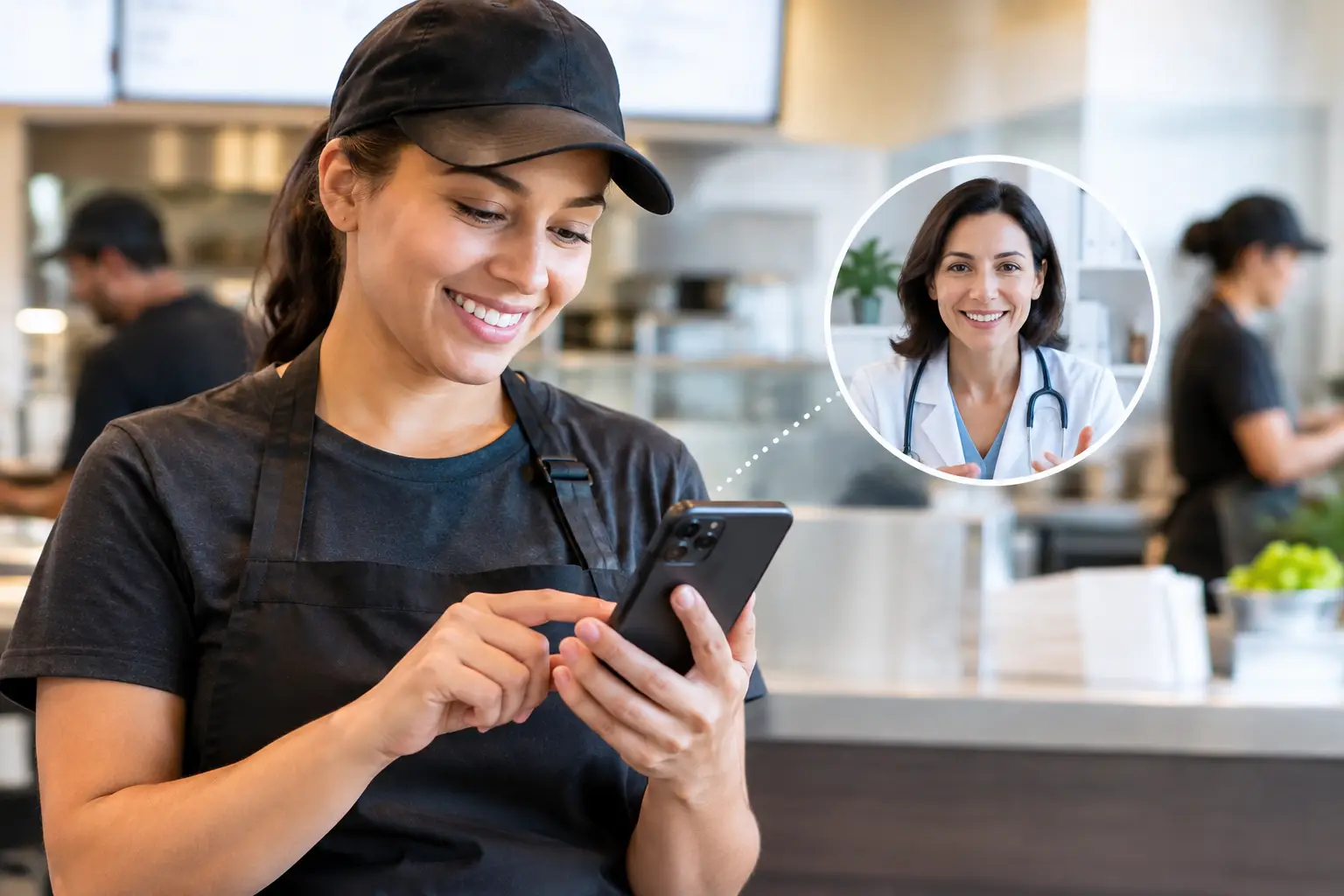
A restaurant can have a strong hiring pipeline and still lose people before they become fully productive. The reason is not always pay, scheduling, or management. Sometimes an employee is trying to refill a prescription, understand an urgent-care bill, find care for a child, or determine whether they qualify for public coverage - all while working variable hours and without a clear place to turn.
That is why frontline healthcare trends 2026 deserve attention from restaurant executives. The issue is no longer limited to whether a company can afford traditional health insurance for every role. A different question is becoming practical: can an employer provide meaningful healthcare access to the hourly and part-time employees who have historically been outside the benefits equation?
For multi-unit operators, that question sits at the intersection of labor economics, execution, and the employment offer. It also requires some precision. Healthcare access is not the same as insurance, and a low-cost program is not automatically valuable. The useful developments are the ones that reduce a real barrier for employees without creating a cost structure or administrative burden that the operating model cannot support.
Why frontline healthcare trends 2026 are different
For decades, the benefits model was built around a fairly stable full-time employee. Eligibility rules, enrollment periods, employer contributions, and plan administration all made more sense in that setting. Restaurants have always had a more complicated workforce reality: a mix of full-time leaders, part-time students, parents, second-job holders, seasonal workers, and employees whose schedules change with business demand.
Traditional insurance remains an essential benefit for many full-time roles. But it has not been an economical answer for every employee a restaurant depends on. The result has been a familiar divide. One group receives a conventional benefits package; another is left to assemble care from personal resources, community options, public programs, and whatever information they can find during a busy week.
What is changing is not that traditional insurance has become obsolete. It has not. The change is that employers now have more credible options between comprehensive insurance and no employer-supported healthcare access at all.
That distinction matters because many frontline healthcare needs are immediate and practical. An employee may need to speak with a physician, compare prescription prices, get help interpreting a bill, or understand whether Medicaid, marketplace coverage, or another public program may be available. Those are meaningful needs even when an employee is not enrolled in an employer medical plan.
The part-time employment value gap is becoming visible
Restaurant operators have long understood that people compare more than hourly wages. They compare the whole employment experience, often informally and through conversations with peers. Yet the value gap between full-time and part-time work can be particularly sharp when healthcare is involved.
A part-time employee may be central to a restaurant's ability to cover peak periods, weekends, catering volume, or seasonal demand. That same employee may not meet eligibility requirements for the benefits traditionally associated with a strong employer. The mismatch is structural, not a failure of intent.
The emerging trend is a broader view of who merits access to healthcare support. It reflects a basic operational fact: eligibility categories do not always map neatly to the people who matter most on the floor, in the kitchen, or on the delivery line.
This does not mean every employee wants the same form of support. A 22-year-old working evenings, a parent working lunch shifts, and a tenured hourly employee managing a chronic condition may each evaluate an offer differently. But broad access can matter precisely because it does not require an employer to predict which household will encounter which healthcare problem next month.
Access is gaining ground as a distinct employer investment
The most useful shift in 2026 is conceptual. Employers are increasingly separating the question of healthcare access from the question of insurance coverage.
Insurance is designed to finance covered medical risk. It is complex by necessity, regulated, and often expensive. Healthcare access can address a different set of problems: getting timely clinical guidance, locating appropriate care, lowering prescription costs, understanding a hospital bill, or receiving help with public-program enrollment.
Those services do not replace insurance. They can, however, be valuable to people who are uninsured, underinsured, covered through a spouse, enrolled in a high-deductible plan, or simply confused by the healthcare system. For restaurant organizations, that creates a more flexible choice than the old all-or-nothing model.
The trade-off deserves attention. A healthcare access program should never be presented as equivalent to comprehensive medical coverage. Executives should be clear about what it does and does not provide. Employees will judge the offer by whether it helps in a moment of need, not by how attractive it sounds in a recruiting flyer.
That is also why depth matters. A program centered only on virtual physician visits may help with a narrow set of needs, but it may leave an employee alone when a prescription is unaffordable or a confusing bill arrives. The more practical models combine care access with savings, guidance, coverage support, and education for the employee's household.
Household relevance is moving from nice-to-have to design requirement
Healthcare decisions rarely stay contained within the employee. A server may miss a shift because a child needs care. A cook may be navigating a spouse's hospital bill. A shift lead may be trying to find affordable medication for a parent or partner. Even when the employer's relationship is with one worker, the healthcare challenge often belongs to a household.
This is one reason household access is becoming more prominent in frontline healthcare design. It recognizes the reality employees live with, rather than treating the employee as an isolated unit of analysis.
For operators, household access is also a test of whether a program has practical value. If the offering only applies in limited circumstances, or employees cannot easily explain it to the people they care for, utilization may remain low regardless of the price. Broad eligibility alone is not enough. The offer must be understandable and relevant outside the workplace.
Cost predictability matters as much as the monthly price
Restaurant leaders do not need another variable expense that becomes harder to explain as headcount changes. The appeal of newer healthcare access models is partly economic: they can be priced per eligible employee per month, without the insurance-level cost, contribution structure, or annual enrollment cycle associated with a major medical plan.
That does not make every low-cost offering worthwhile. A CFO should still ask what employees receive, who can use it, what implementation requires, how support is delivered, and whether the company can communicate the benefit clearly across locations and shifts.
The best financial comparison is not simply program cost versus zero. It is program cost versus the value of closing some portion of the part-time employment value gap. That value will differ by concept, labor market, wage structure, and workforce mix. A growing quick-service brand, a high-volume casual dining group, and a seasonal resort restaurant may reach different conclusions.
Still, the economics have changed enough to make the evaluation reasonable. A platform such as Ful.Health, for example, can provide healthcare access beginning at $8.95 per employee per month, including unlimited $0 physician access, prescription savings, hospital-bill support, public-program enrollment assistance, healthcare guidance, and household access. It is not health insurance. Its relevance is that it gives employers another way to make healthcare support available to employees who have often been difficult to cover through conventional plans.
Implementation will separate useful programs from decorative ones
Frontline teams do not experience benefits through a benefits portal alone. They encounter them between shifts, on a phone, after receiving a text, or when a personal healthcare issue has become urgent. That puts a premium on plain-language communication and a service model that does not depend on a general manager becoming an unpaid healthcare navigator.
A practical evaluation should examine the employee journey. Can a new hire understand the offering in a few minutes? Can someone use it outside standard office hours? Is support available when the employee's question is not clinical but financial or administrative? Does the employer receive enough implementation support to make the benefit real without handling personal health information?
The right level of reporting also depends on the organization. Leaders need confidence that a program is being made available and understood, but employee privacy is not negotiable. Aggregated engagement information may be useful; individual health details should not be part of an operator's management process.
A better question for 2026
The most productive question is not whether a healthcare access benefit will solve every labor challenge. It will not. Restaurants are complex businesses, and employees make work decisions for many reasons.
The better question is whether the company can now make a meaningful healthcare investment in the people it relies on, including those outside traditional benefit eligibility, at a cost and level of complexity that fit the business.
That is the insight worth carrying forward: for much of the frontline workforce, the choice is no longer comprehensive insurance or nothing. Employers have a credible middle ground. The organizations that examine it carefully may find they are not adding a perk. They are reconsidering what a valuable employment offer can include.